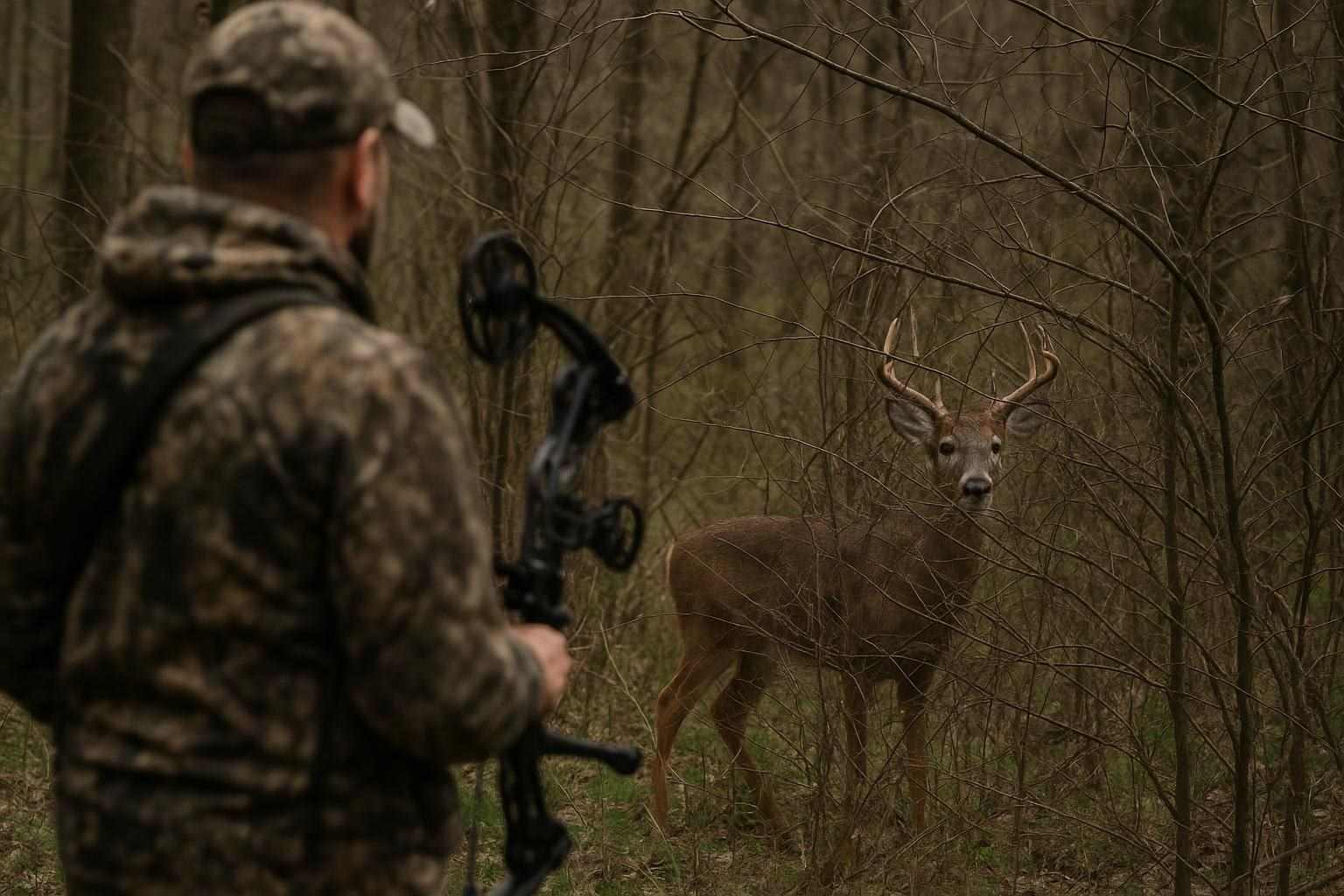
Navigating the Perfect Moment: Bowhunting Considerations, for Ethical Shots
Deciding when to shoot a deer can feel like a pressure. It's not about being excited or wanting to take a shot. It's about thinking. You need to look at a lot of things to make sure your shot is clean and respectful to the animal. If you draw early you might not aim right. If you wait long the deer might be gone. So you need a plan. One that includes shot placement following Illinois hunting rules and knowing your skills. That way you can make choices in the woods.
Assess the Deers Position
Distance matters,. The deers position matters more. A deer standing broadside is your chance. That means you can aim at the heart and lungs.. If the deer is at an angle. Like quartering away. The shot gets risky. Bones can block your arrow or the entry point is too small. You have to be careful.
When you're watching the deer don't just look at how big it looks. Look at how it's acting. Is it calm? Standing still? That helps. If it's moving around or looks nervous it's harder to predict. You need to see a path for your arrow.. You need to be sure you can find the deer after the shot. If you're not sure don't shoot. It's okay to wait. Better to pass than to make a shot.
Recognize Cover as a Significant Obstacle
Branches, tall grass and thick brush are problems. You might see the deer clearly through your sight. That doesn't mean your arrow will fly free. An arrow can't fix itself if it hits a twig. Even a little bump can send it off course.
Check your line of sight carefully. Look beyond the deer. Is it near cover? Edges of fields? Areas with lots of brush? You need to be certain the arrow's path is clear. If the deer is moving behind cover you might have to hold your draw for a time. If you can't be sure the shot is clean let it go. This might mean missing a chance. It keeps you from having to track a deer.
Factor Your Own Position and Stability
Your body position affects your shot more than you think. Before you draw make sure your feet are steady. Can you turn your body smoothly? If you have to twist or you're close to a tree or branch your aim will suffer. You need to be balanced and comfortable.
Wind is another thing to watch. A sudden gust can throw off your shot. Trying to adjust on the fly is risky. If the deer is moving,. Wait until you're settled. Don't draw just because time is running out. Make sure you're ready.
Before you go hunting set no-shot rules. Know what situations you won't shoot in. Like ground or bad angles. Stick to those rules. Decisions under stress often lead to mistakes. So prepare your mind ahead of time.
Ensure Your Equipment is in Prime Condition
Your gear must be checked before every hunt. Look at your bowstring. Is it frayed? Tighten your sights if needed. Check your arrows. Are they damaged? Is the broadhead bent? Is the nock sitting right? Fixing these things prevents missed shots.
Pay attention to changes in how your gear feels. If your bow vibrates or makes noise when you shoot look into it before your hunt. Make sure your arrows fit your bow and are free from defects. Check that your broadheads are tight, sharp and allowed under Illinois game rules.
Don't change anything in the field unless you've tested it before. If a change affects how your bow feels go back to your practice area to get used to it again.
Mastering the Art of Patience
Practice is not about shooting. It's also about learning when not to shoot. Use practice to train yourself to hold back. Set up situations where there's cover blocking your shot. Have someone act as a deer and move unexpectedly. This builds muscle memory for restraint.
Practice in hunting conditions. Wear your hunting clothes use your gear and practice from positions you'll use in the field. Learn to draw anchor properly. Let down calmly. This helps if the deer moves suddenly.
Be honest with yourself about your shooting range. If your arrows start spreading out or you feel unsure at distances shorten your range. Work on your skills. Know your limits in practice so you can trust your judgment when it counts.
A Final Checklist for Decision Making
Before you draw ask yourself these questions:
– Is the deer at an angle where the shot will hit the organs and the animal can be recovered?
– Is the path for the arrow clear of branches and other obstacles?
– Are my feet and body in a position for a good shot?
– Is the deer calm or moving in a way that makes it hard to predict?
– Have I checked my equipment and feel confident in my position?
– Are there any Illinois hunting rules I need to double-check?
Stay up, to date with the Illinois Department of Natural Resources. Make sure you have the licenses are hunting during the season and are using allowed gear. A good hunt depends on things coming together. When you're not sure wait. Patience and caution protect your honor as a bowhunter.