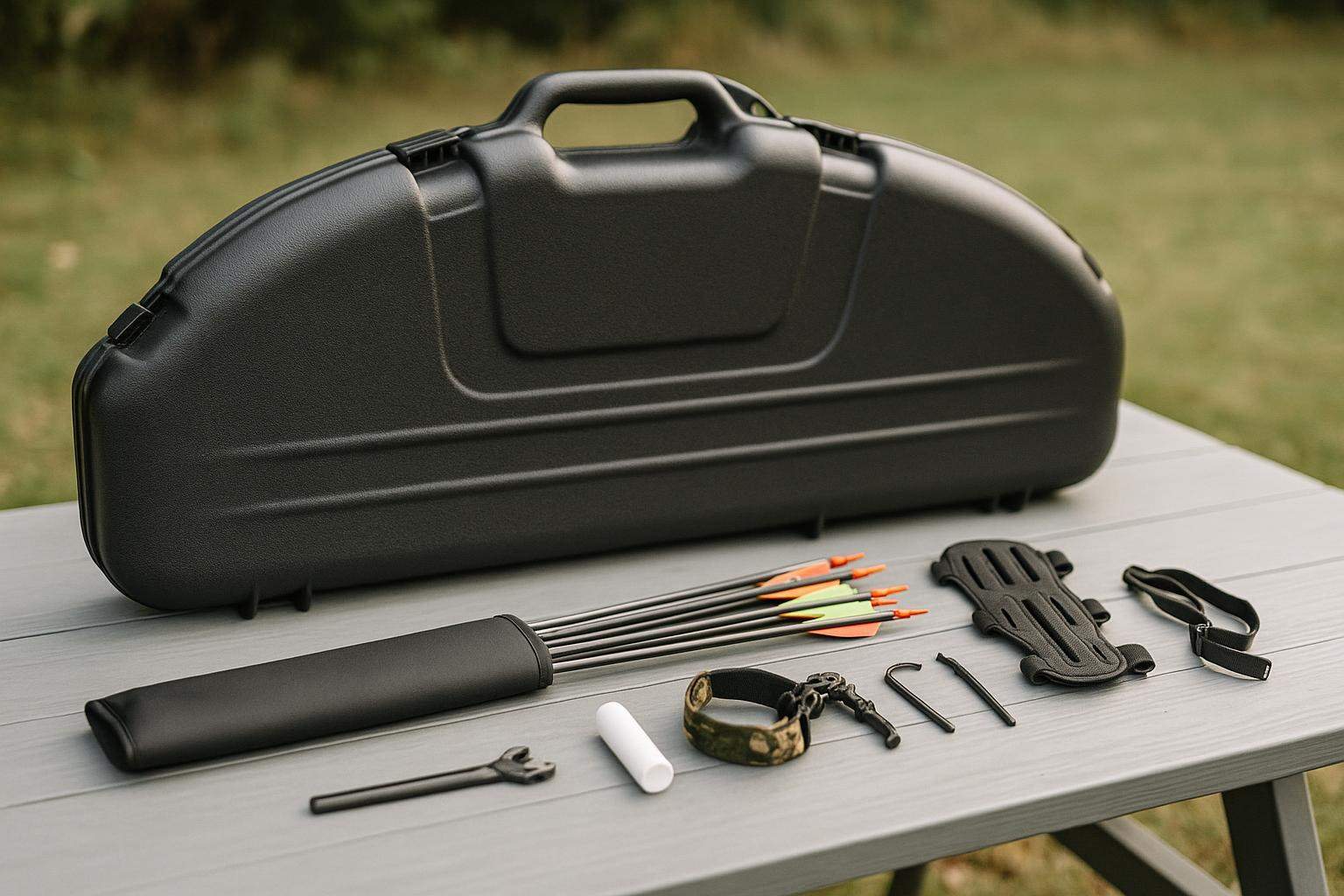
The evening before opening day, decide whether your setup is truly ready or merely familiar. A bow that felt fine last season can develop a loose fastener, worn serving, or poorly tuned rest in storage. A rushed shot can expose weak practice habits just as quickly as damaged equipment reveals neglected maintenance. This check focuses on decisions that protect both the hunt and the animal.
Start with the rules, not the gear
Before laying out arrows, confirm the current Illinois bowhunting regulations from the Illinois Department of Natural Resources and any applicable local authority. Check season dates, open areas, license and permit requirements, legal equipment provisions, and site-specific restrictions. Regulations can change, so last season's memory or an old screenshot is not enough.
Settle questions that could cause hesitation in the field. Know where you may park, access the property, and place a stand or blind under the landowner's or public-land rules. Keep required documents accessible, and make sure everyone in your party understands the current requirements rather than assuming one person checked them.
Legal compliance is the baseline. Ethical conduct requires a separate decision about what you can do reliably.
Give the bow a quiet, close inspection
Set the bow on a stable surface and examine it in good light. Check the limbs, cams, axles, string, cables, serving, nocking point, rest, sight, stabilizer, and quiver for fraying, separation, cracks, unusual wear, loose screws, bent parts, or movement since your last session. Clean the string and cables only with a product the manufacturer permits; avoid improvised repairs or modifications.
Perform a slow draw without an arrow, pointed safely away from people and animals. Notice unfamiliar noise, grinding, sudden resistance, or a changed draw cycle. Stop if anything feels different. Do not dry-fire or force a damaged system; a questionable component can cause injury, not merely inconvenience.
Inspect arrows individually. Reject any shaft with a crack, deep gouge, loose insert, damaged nock, or questionable fletching. Spin each arrow if you have a suitable method, and confirm that broadheads are secure and protected during transport. An arrow is not necessarily sound because it survived the last outing.
Turn the inspection into a useful checklist
A short written list keeps familiar items from receiving less attention than unusual ones. Mark each item only after checking it:
– Bow: limbs, cams, axles, string, cables, serving, draw stop, and fasteners
– Accessories: rest, sight, release aid, stabilizer, quiver, and peep alignment
– Arrows: straight shafts, secure inserts, sound nocks, clean fletching, and protected broadheads
– Carry gear: pack, safety equipment, phone, flashlight, release backup, and weather-appropriate clothing
– Hunt details: current regulations, permissions, access route, stand condition, and emergency contact plan
A checklist matters only when it leads to action. Replace damaged parts, arrange qualified service for a suspected bow problem, or postpone the hunt. "Probably fine" is not a technical inspection result.
Practice the shot you may actually get
A few comfortable shots at a familiar target do not test opening-day readiness. Practice from realistic positions, clothing, and angles. Wear expected layers, use an elevated platform only when it can be done safely, and rehearse drawing without excessive movement. If a sleeve, face covering, or pack strap changes your anchor, discover that before the hunt.
Begin at a distance where your groups are controlled, then extend only while your form remains repeatable. Watch for a collapsing bow arm, inconsistent anchor, string plucking, or a rushed release. Shorten the distance and rebuild the shot rather than increasing the challenge.
Add modest pressure to practice. Set a time limit, use an unfamiliar aiming point, or take one carefully considered shot after putting on your hunting gear. The goal is to learn whether your breathing, anchor, and aiming process hold together when the shot is inconvenient-not to create drama.
Make ethical shot placement a firm boundary
On opening day, a deer may appear while your body is turned, your footing is poor, branches interrupt the lane, or the animal is moving. Pass if you cannot identify a clear, responsible opportunity. Anticipation and a long wait do not make an unsuitable angle acceptable.
Define your limits before hunting. Consider the distance at which your groups stop being dependable, the angles you can judge confidently, your ability to remain undetected while drawing, and the background beyond the target. Ethical shot placement depends on more than where the sight pin lands. You need a clear vital-area presentation, stable shooting position, appropriate arrow setup, and enough certainty to shoot without forcing the opportunity.
If the animal moves at the wrong moment, let the bow down when possible and wait. A clean opportunity that never comes is better than a hurried attempt that creates a difficult recovery or unnecessary suffering.
Use the final evening to remove uncertainty
Return to the Saturday-evening scenario: the equipment is laid out, regulations are checked, and the last practice arrows are shot. The best final decision may be to leave an accessory at home, replace a suspect arrow, reschedule until a repair is complete, or refuse to shoot beyond your practiced distance. Preparation is not a promise to take an animal; it enables sound choices when the moment arrives.
Pack deliberately, protect broadheads, secure the bow for transport, and review the access and safety plan once more. Then stop tinkering. Last-minute changes create new variables when consistency is what you need.
Opening day begins with a quiet standard: every part of the setup should be serviceable, every legal detail current, and every possible shot judged against the animal's welfare rather than the excitement of the opportunity.