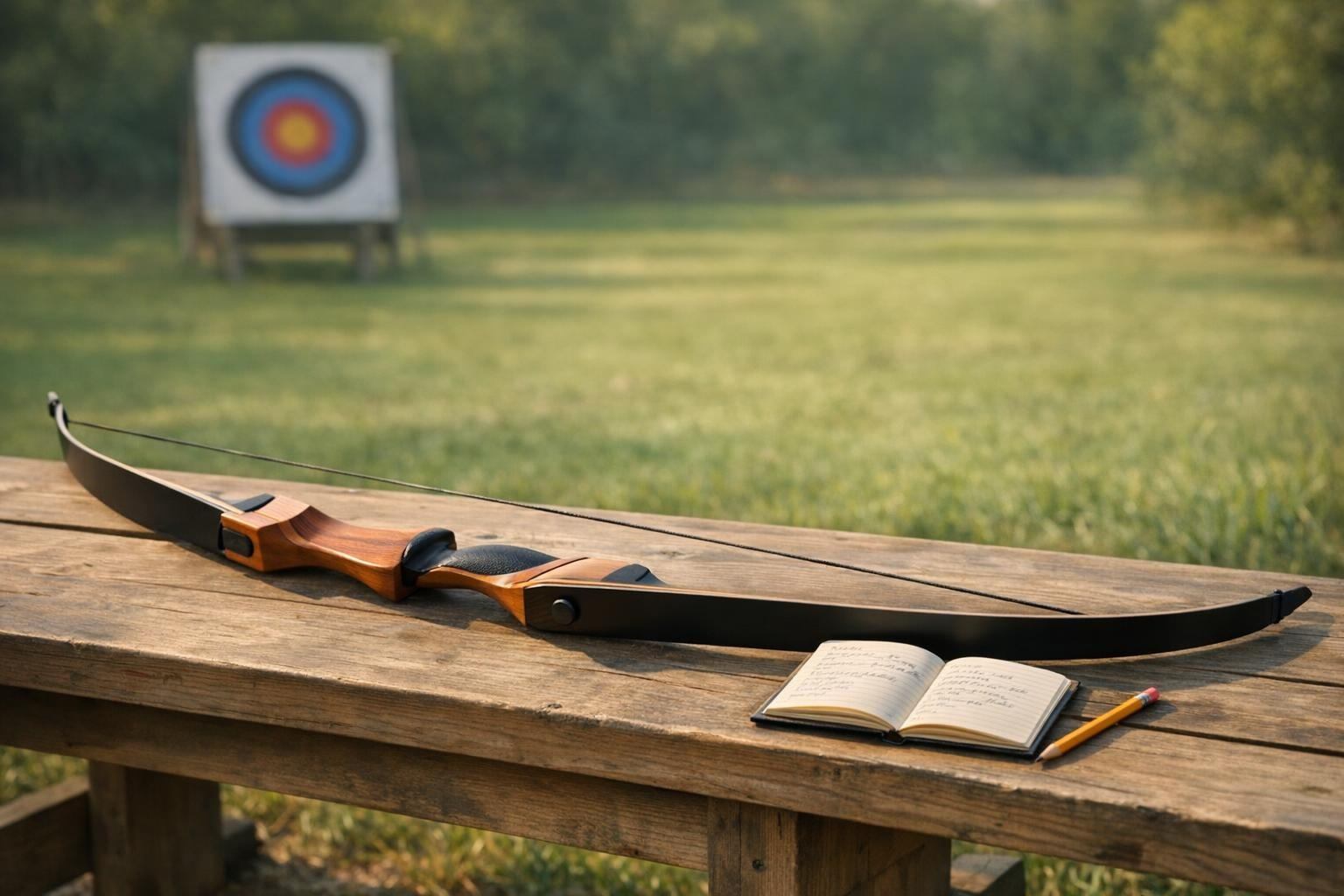
If you're working a lot of hours, it's easy for shooting practice to get pushed to the edges of your busy schedule. Even short sessions of practice are worth something, and recording what you do will help you to ensure that you get some value out of them. In recording your practice, it's not about how many arrows you shoot, it's about what you can learn from each session about your form, your equipment, your concentration and your hunting ethics. Also, a simple set of practice notes will help you to spot the occasions when you're tired or rushing and should stop for the day.
Start with a record you will actually use
The best recording system is one that is easily carried and will survive being left at home after a late shift, getting washed out on a wet practice evening or being abandoned when practice time disappears from an already crowded schedule. A small notebook, a few phone notes or even a simple spreadsheet will do. Keep it in one place.
For short notes record the date of your practice, how long you shot for, the distance you were shooting at, what you were shooting with and the objective of your session. It will suffice to detail your aim for the session in a few words. "Short form practice" or "Steady Anchor" for example.
Mark your own level of Energy, Focus, and Physical Comfort before shooting with words like: good, limited, or stop. These few words record the most important circumstances of your shooting results. A poor group of arrows after a demanding day on the archery range could have been caused by more than just lack of shooting skill.
Separate practice goals from score chasing
At its core, each archery session should have one aim. So for the beginner this might be to repeat a good draw, repeat a good anchor, repeat a good release, complete a shot with good follow through or complete a shot with good shot selection. And yes scoring is involved in practice sessions but it's not the only thing to measure.
Note down the skill you need to practice in order to shoot responsibly. If practicing repeatable draw for example, scores will be of secondary importance, and it is more important to note how repeatable your anchor is. The same applies for shot process and group shape at practical ranges.
Remember to set realistic goals. The tired archer is much better served by a short form-focused session than by a long poorly executed practice session. End the session when you can no longer concentrate and practicing would result in careless shooting.
Fit practice into the workweek
Don't try to jam in a ton of practices into your schedule. Instead, find out the time of day or week when you are at your best and practice during that time every week. Try to schedule your practices out for the week ahead of time just as you would any other appointment. Most archers have only so much time to shoot each week and need to make the most of it.
Alternate session types throughout the week (e.g. short sessions of practice form shots at close ranges using blank bales, longer sessions practicing aimed shots at various ranges, etc.). Less frequent sessions can be used for more in-depth inspections of the archer's equipment and for more complete practice sessions.
A missing practice session is not necessarily a bad thing! Be sure to mark whether a session was missed, moved to a different time, or even just replaced with something else. Don't let an unrealistic practice schedule fall apart after only a few weeks!
Track patterns, not isolated arrows
Archery practice records do need to detail out repeated patterns that show up in your shots, such as shots drifting off to the right or left, where your form starts to break down and make uncomfortable shots, and where your first few shots of the session are considerably different than your latter shots. Note out distractions to shot taking (such as dogs, other people, cameras, etc.), shot taking in unusual weather, shot taking while wearing different clothing than normal, etc. Also note any physical afflictions that affect your form and/or shot.
Don't diagnose every small error immediately. See if it happens again and again and note the patterns before you try to correct it. A left to right drift in your groups for example would need to be observed for stance, for grip, for anchor and for release before you start tweaking the form of your practice.
Add additional notes to describe changes made to equipment i.e. draw length, arrow rest position, sight settings, etc. Give a reason for the change and track results for subsequent shooting sessions to establish whether the change worked. Only change several parameters at a time.
Use honest checks for hunting readiness
Just because you had a great day on the practice range does not mean you are ready for the hunt. Record your observations to develop an ethical bowhunter by tracking your ability to repeat a reliable process, shot after shot. Record also your ability to select shots to take in the hunt. As you practice record where you have controlled shots, under what conditions, and how you were feeling. Were you calm, rushed, sore, tired, or distracted in some way. This will help you establish a boundary of what you are able to shoot under certain situations.
Outline the situations in which you can shoot reliably for repeatable results (distance, good or poor light, relaxed or fatigued, practiced or unpracticed shooting positions). Identify those patterns in which repeatable shots are difficult and recognize the specific shooting errors and corresponding form errors in each of these instances.
Note whether any of your equipment is worn and due for replacement. Check the maker's guidance for any maintenance or inspection that should be done to any of your arrows, strings, cables, etc. Remember that your practice records are no excuse for continued use of poor equipment. Similarly, while hunting regulations, season dates, required archery training, etc. can change at any time, records for these items should be current as specified by official current Illinois law and regulations.
Review the record before changing course
Review your notes at the end of the workweek or so, and record a few points about your practice: a skill that is getting steadier, a problem that is recurring, and a solution to implement for next time's practice. Try to keep this to a few minutes, so it does not become another thing you put off.
Think of ways to cut back on your time at archery practice or rearrange your already packed schedule. Perhaps shorten your sessions, switch up the time of day for practice, focus on one aspect of shooting form, or go in for an inspection of your archery equipment. Whatever you decide, remember that there is always more to practice before you can reasonably hunt.
Do not compare sessions of vastly different conditions. Example: an extremely hurried practice at the indoor range, an out doors session with not a care in the world, and after physical work practice sessions for example. Each answer a different question for you.
Tracking practice is best used to provide clear documentation to see progress in ones shooting. If one records all their practice sessions, including long practice sessions after a long day of work and poor shooting due to fatigue for example, then one will have a clear and honest record of preparation to hunt bowhorns in Illinois.